Website Preview
Tool Guide
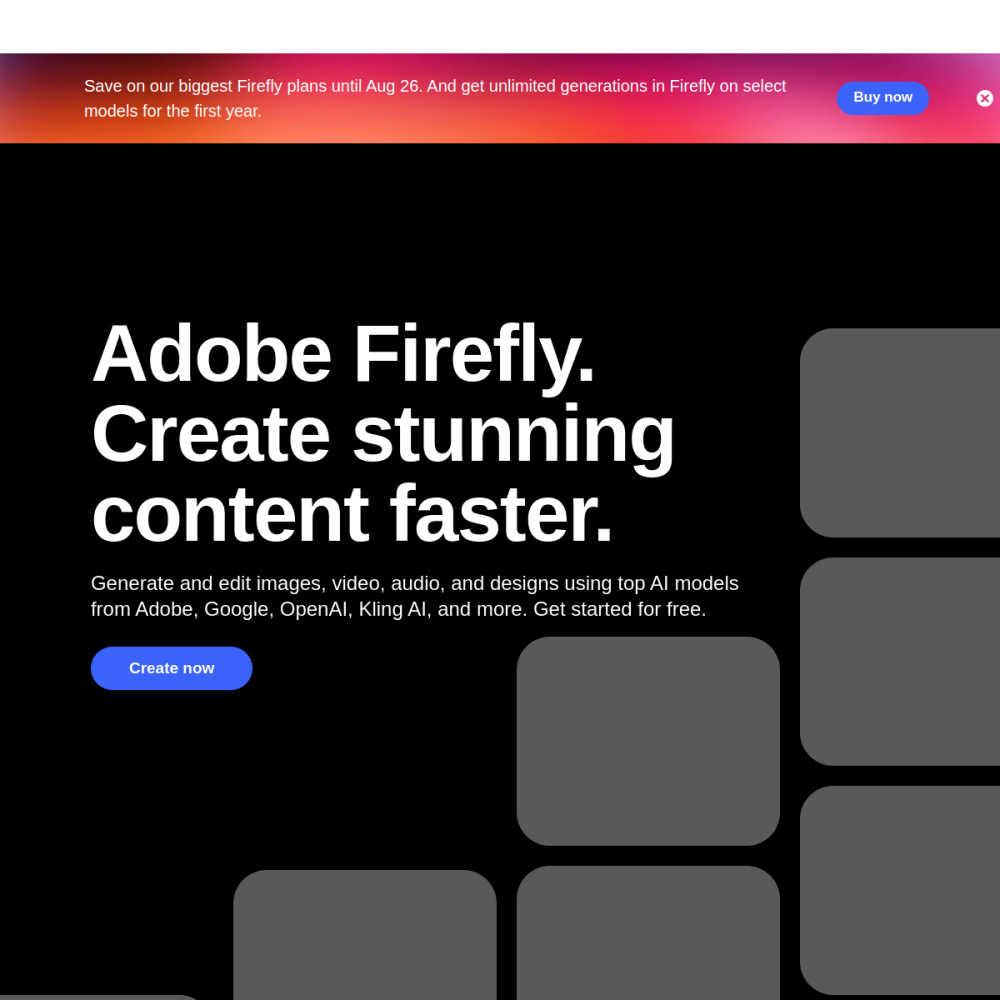
Adobe Firefly is an AI image generation tool developed by Adobe. It focuses on creating generative images that are safer for commercial use compared to many other models. This distinction addresses common concerns regarding copyright and licensing in the creative industry.
Users can access this platform to produce visuals for marketing, design, and personal projects. The tool integrates with Adobe's ecosystem, allowing creators to generate content with confidence. Understanding its capabilities helps teams adopt AI without risking legal issues.
Adobe Firefly represents a significant shift toward responsible AI in creative software. It is built to ensure that the generated outputs are less likely to infringe on existing intellectual property rights. This foundation ensures that the generated outputs are less likely to infringe on existing intellectual property rights.
The platform offers text-to-image generation and other editing capabilities within the Adobe ecosystem. It is part of Adobe's broader strategy to bring AI into professional workflows securely. By prioritizing safety, Adobe positions Firefly as a reliable option for enterprise needs and professional design tasks.
The core functionality includes text-to-image generation where users describe desired visuals in detail. Firefly also provides generative fill options for expanding or modifying existing photos easily. These features allow for precise control over the final output and composition.
Another important aspect is the commercial readiness of the generated assets for business use. The tool is designed to provide commercially safer generative images for users. This feature reduces liability for businesses using AI-generated imagery in marketing campaigns and official communications.
Adobe Firefly is designed for graphic designers, marketers, and content creators working professionally. It suits professionals who need high-quality visuals for client work or brand campaigns regularly. The commercial safety aspect appeals to agencies and corporations with strict legal guidelines and compliance requirements.
It is also useful for individuals seeking AI tools for personal projects and hobbies. However, the primary value proposition targets users who require licensed content without risk. Anyone needing reliable AI image generation without copyright ambiguity will find this tool relevant for their workflow.
Marketing teams use Firefly to create social media graphics and ad banners quickly and efficiently. Designers utilize it for mood boards and initial concept art during the planning phase. The tool helps accelerate the creative process without compromising on asset safety or quality standards.
Photographers might use generative fill to extend backgrounds or remove unwanted objects from shots. Content creators generate unique illustrations for blogs and presentations to engage audiences. These applications demonstrate the versatility of the platform across different media types and industries.
To begin, users can access the tool via the Adobe website or integrated apps like Photoshop. Clear prompts yield better results when generating images from text descriptions. Specific details about style, lighting, and subject matter improve accuracy and relevance.
Experiment with different prompt variations to find the desired look and feel. Review the generated images carefully before finalizing them for commercial use and distribution. Following best practices ensures the best outcome from the generative AI capabilities and maintains quality.
Access options vary, with some features available through Adobe subscriptions or specific credit systems.
Yes, the tool is designed to provide commercially safer generative images for users.
It focuses on being commercially safer compared to many other generative models.